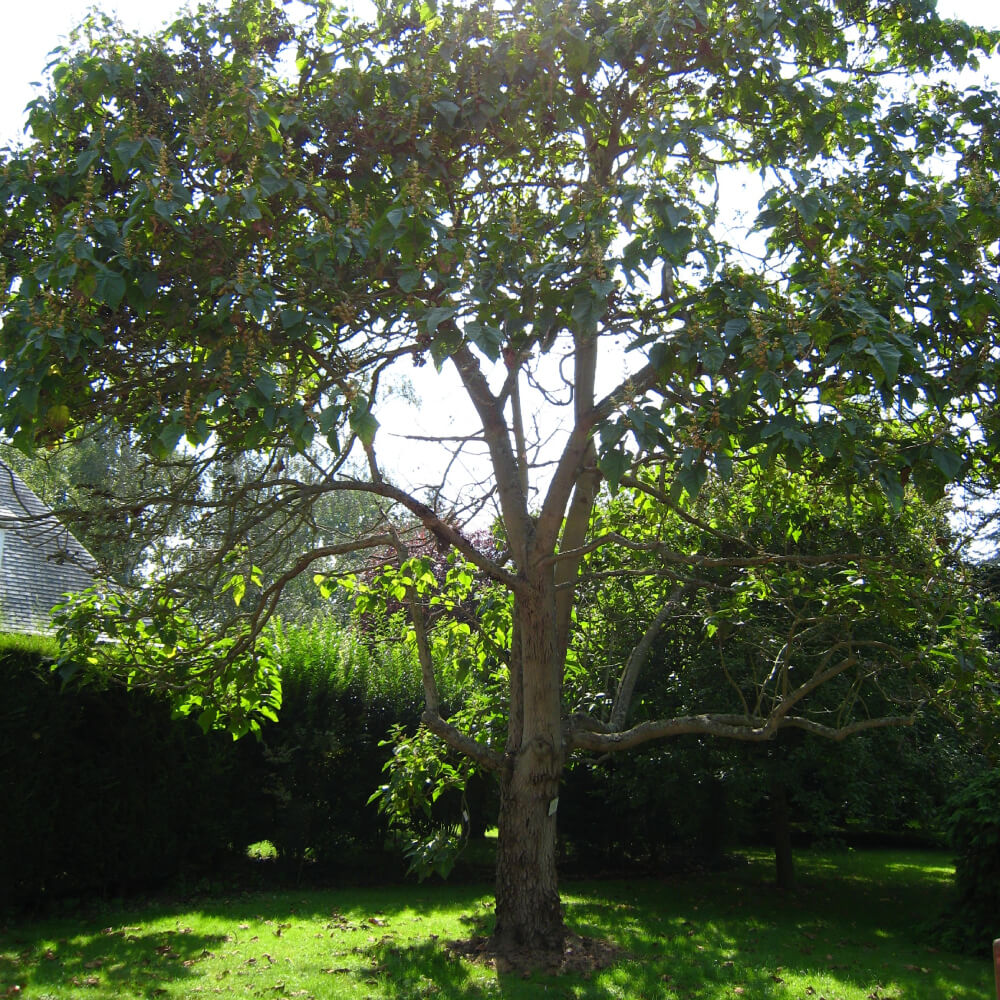
Paulownia
Botanical Information
- Paulownia belongs to the Paulowniaceae family.
- The most common species is Paulownia tomentosa.
- The tree can reach a height of 15–20 meters.
- Its flowers are violet or light blue and produce abundant nectar, making them valuable for beekeeping.
Characteristics
- Very fast-growing, with an annual growth of 3–4 meters.
- Large leaves, up to 40 cm long, which effectively absorb carbon dioxide (CO₂) and release oxygen (O₂).
- Highly resilient to various climatic conditions and changes.
- Easy to cultivate, requires minimal care, and adapts well to different soil types.
Uses
- Agriculture: Improves soil quality and is effective for landscaping and greening purposes.
- Beekeeping: Flowers produce large amounts of nectar, useful for honey production.
- Soil stabilization: Used to conserve, restore, and improve soil.
Relevance for Armenia
- It is excellent for soil improvement and for combating wind erosion.
- It has high value in terms of beekeeping and agricultural use.
- It is not intended for urban landscaping and is not planted within city areas.